You are using an out of date browser. It may not display this or other websites correctly.
You should upgrade or use an alternative browser.
You should upgrade or use an alternative browser.
Tensei Shite High Elf ni Narimashitaga, Slow Life wa 120-nen de Akimashita - Highelf with a Long Life - Ch. 54.1 - Interlude: Upon the Throne
- Thread starter MangaDex
- Start date


Dex-chan lover
- Joined
- Oct 29, 2024
- Messages
- 2,146
Katanas are no harder to forge than any other sword.
We're really about to go on a multi-month arc on glazing the ever living crap out of glorious nippon 1000-fold forging technique using crappy iron sand. This whole technique was because the steel quality they had was shit and it was to make the material more homogeneous not because it magically made super steel

Dex-chan lover
- Joined
- Jan 20, 2025
- Messages
- 10,899
He can make a regular sword but not a katana, because of its slim yet incredibly sharp design. He must have struggled with that part


thanks for translation

Dex-chan lover
- Joined
- Mar 17, 2025
- Messages
- 469
must say i am getting tired of the constant glazing of the katana in manga anime etc, like i get it but it does get annoying hearing it talked about like it's a sword forged by the gods all the time

Dex-chan lover
- Joined
- Jul 31, 2019
- Messages
- 1,332
This is correct, but, if you just have the sword and don't know the need for dual steels (soft on the spine and hard on the edge), it must be REALLY difficult to recreate. Not to mention, the huge need for exhaustive labor by 6-8 craftsmen.We're really about to go on a multi-month arc on glazing the ever living crap out of glorious nippon 1000-fold forging technique using crappy iron sand. This whole technique was because the steel quality they had was shit and it was to make the material more homogeneous not because it magically made super steel
That doesn't make the blade anything special or powerful (Aesir says as much). But it's culturally significant and better suited to certain combat styles.
Last edited:
Dex-chan lover
- Joined
- Jun 28, 2020
- Messages
- 1,674
But imagine trying to reverse-engineer it with only the end result and no analytical tools beyond your own eyes and maybe some magnifying glasses.Katanas are no harder to forge than any other sword.
Folded steels are largely unnecessary if you have good steel like modern steels. Soft spine and hard edge can be done through differential heat treatment and/or lamination of two softer steels with a harder steel center. Theres nothing inherent about the process of making tamahagane that makes it better for any style of combat. Modern katana made with 1095 or T10 would be practically considered a mythical sword back in the dayThis is correct, but, if you just have the sword and don't know the need for dual steels (soft on the spine and hard on the edge, it must be REALLY difficult to recreate. Not to mention, the huge need for exhaustive labor by 6-8 craftsmen.
That doesn't make the blade anything special or powerful (Aesir says as much). But it's culturally significant and better suited to certain combat styles.
Last edited:

Dex-chan lover
- Joined
- Oct 29, 2024
- Messages
- 2,146
It's a one bladed two handed curved sword. There are hundreds of different styles of those kinds of Swords so wouldn't be that hard to figure out how to make a katana.But imagine trying to reverse-engineer it with only the end result and no analytical tools beyond your own eyes and maybe some magnifying glasses.

Dex-chan lover
- Joined
- Feb 12, 2019
- Messages
- 68
The exact process might be difficult to figure out (why would one consider using inferior raw materials if not by necessity), but a master blacksmith not being able to notice differential hardening makes no sense. Differential hardening/tempering was done at various points ancient europe, midde east, and asia, it's not exclusive to Japan.This is correct, but, if you just have the sword and don't know the need for dual steels (soft on the spine and hard on the edge, it must be REALLY difficult to recreate. Not to mention, the huge need for exhaustive labor by 6-8 craftsmen.
That doesn't make the blade anything special or powerful (Aesir says as much). But it's culturally significant and better suited to certain combat styles.

Dex-chan lover
- Joined
- Feb 14, 2018
- Messages
- 4,738
It's not just Differential hardening, but also using different steels in the first place.The exact process might be difficult to figure out (why would one consider using inferior raw materials if not by necessity), but a master blacksmith not being able to notice differential hardening makes no sense. Differential hardening/tempering was done at various points ancient europe, midde east, and asia, it's not exclusive to Japan.
Realistically, with just that concept it should've been possible to fulfill the katana order. But there could be some cultural or conceptual reason otherwise, like the popular metals not fusing properly, and never thinking to use slightly inferior metals with better welding compatibility.
And that's what makes it hurt their pride so much: it was literally a skill issue, and it being not that difficult in retrospect makes it suck all the more for them. So at this point, they're gonna do all the steps including the iron sand out of respect. Optimizing can come later.


Dex-chan lover
- Joined
- Jan 24, 2018
- Messages
- 5,737
thanks for the release.
but really, who would believe someone summoned mountains to surround a city?
would have been funny if he mentioned it in letter as a footnote
Remember that Aesir is just the latest iteration of the world cycling myth with the dragon/phoenix/titan and all that.
Anything ancient enough and hearing "(high) elf blockade in a country with a mountain" would not be surprise it happen, but might question on why going with the 'soft' method of just locking them in and not just...y'know, bury them in the mountain while at it.
Or that time Aesir animate a giant golem to punch down a church and the people just view it as divine punishment of some kind.


Supporter
- Joined
- Jan 24, 2018
- Messages
- 9,024
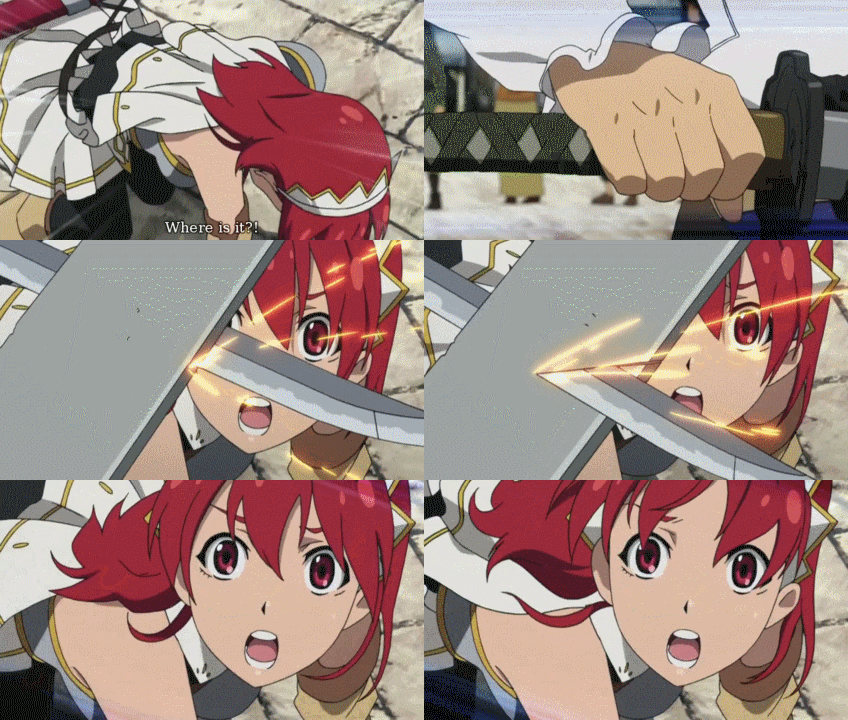
I will not hesitate in reposting...

Supporter
- Joined
- May 7, 2018
- Messages
- 1,442
The dwarf's real issue is that the katanas he is making, with actual good materials and techniques, aren't shit like the one they had, so he is despairing that he can't lower his own skill.
Dex-chan lover
- Joined
- Sep 4, 2019
- Messages
- 54
No, but they are different. They come from a different tradition of forging, which can be a difficult thing to recreate whole-cloth, especially when you're already so far down another path. It even says that they were able to create katana-shaped objects—things that I assume mimicked or even improved upon the shape and properties of the katana—but were still different enough that it did not have the "soul" of the weapon they talk about.Katanas are no harder to forge than any other sword.
So a katana is no more difficult to make (and isn't magically superior to) other swords, if you already know how, but if all you are familiar with is what appears to be roughly-medieval European smithing techniques, reinventing the details of Japanese metallurgy is no easy task.
Similar threads

- 6
- Replies
- 7
- Views

- 88
- Replies
- 89
- Views
- 5
- Replies
- 6
- Views

- 71
- Replies
- 72
- Views
Users who are viewing this thread
Total: 8 (members: 4, guests: 4)