You are using an out of date browser. It may not display this or other websites correctly.
You should upgrade or use an alternative browser.
You should upgrade or use an alternative browser.
Danjo-hi 1:5 no Sekai demo Futsuu ni Ikirareru to Omotta? ~Gekiomoi Kanjou na Kanojo-tachi ga Mujikaku Danshi ni Honrou Saretara~ - Vol. 1 Ch. 1
- Thread starter MangaDex
- Start date


- Joined
- Nov 18, 2018
- Messages
- 21,785
Don't forget the van.Shit, so all I gotta do to get girls to fawn all over me is to give them candy?
Brb.

Dex-chan lover
- Joined
- Jun 4, 2025
- Messages
- 184
I hope this is ACTUAL harem and not waifu contest... With the lames heroine being the one who ends up with the MC... Yeah I'm see you there Quintuplets....

- Joined
- Jul 22, 2025
- Messages
- 8
women get a taste of being a man in this world lol

Member
- Joined
- Dec 3, 2024
- Messages
- 33
THIRTY NINE!?This will definitely draw comparisons to another manga that is fairly popular. It is not fair to say that but the humor & the dialogue of women is what made it good. Too soon to call it but Masato will probably not notice the situation he is in for until it is too late. Thanks for the translations.
1:39 sounds insane
I mean, I guess 1:5 is pretty insane, too. But the percentage of guys is still like. . . Well I was about to say 20% but no it's actually like 17%, right?
1:39 is way deep in single digit percentage territory, lol. 2.5% of the population is male, right? Dang, that's rough, lol
Well. . . I bet I could take it, lmfao
Member
- Joined
- Dec 3, 2024
- Messages
- 33
Interesting premise. . . Probably way more widespread in porn, lol
Also, I didn't notice until later that Koumi's friend is in the little montage[?] at the end there, so I guess she will eventually end up with Masato, too
Exactly five women in that section and on page 46. Seems fitting.
But it's also a little funny that Koumi doesn't even get top billing on page 46
Also, I didn't notice until later that Koumi's friend is in the little montage[?] at the end there, so I guess she will eventually end up with Masato, too
Exactly five women in that section and on page 46. Seems fitting.
But it's also a little funny that Koumi doesn't even get top billing on page 46
Dex-chan lover
- Joined
- Feb 25, 2024
- Messages
- 1,697
"Why are men so arrogant?!"
The men of this world could relate, sweetheart.
The men of this world could relate, sweetheart.
Fed-Kun's army
- Joined
- Jul 16, 2023
- Messages
- 136
so... good enough to pass time
it's kinda just... overall a 6
it's kinda just... overall a 6
Member
- Joined
- Apr 6, 2025
- Messages
- 34
so, she likes mc because mc is "not normal" right? at least in that current world


Dex-chan lover
- Joined
- Sep 9, 2025
- Messages
- 494
⚠️DANGER⚠️DANGER⚠️
WE GOT A YANDERE-LIKE AS A MAIN HEROINE
⚠️I REPEAT⚠️
WE GOT A YANDERE-LIKE AS MAIN HEROINE
WE GOT A YANDERE-LIKE AS A MAIN HEROINE
⚠️I REPEAT⚠️
WE GOT A YANDERE-LIKE AS MAIN HEROINE

Dex-chan lover
- Joined
- Feb 27, 2024
- Messages
- 1,388
Women are easy, just be kind to them.
Supporter
- Joined
- Aug 18, 2023
- Messages
- 458
Please pay more attention to your classes. Especially mathematics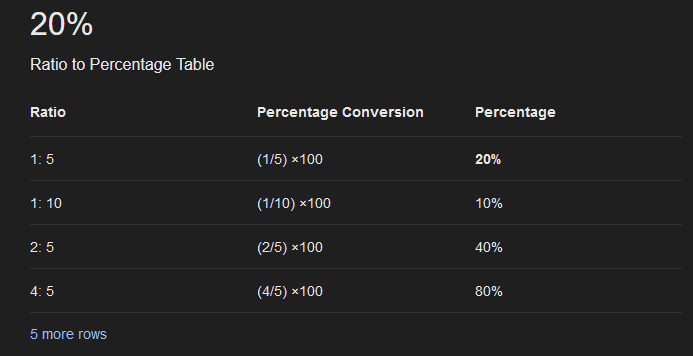
Google says I'm mathin right. <- my arrogance
Edit: No wait, nevermind I calculated improperly. It's actually closer to 10K, but you're right in that my numbers were off. And now I have fixed previous posts inaccurate calculations. I think the basic premise of the calculations were fine so I left them as is. Thanks for the correction, mate.

Dex-chan lover
- Joined
- Jun 6, 2025
- Messages
- 645
This one is better. Not a cruel desperation like 1:39"1:5", huh? how familiar lol
- Joined
- Mar 27, 2026
- Messages
- 8
The translator knew what we were thinking that's why he wrote she overdid it yesterday (in game)
Hey, so I just discovered this series today and looked into the comments for some interesting takes. I appreciate your posts here, I think the "gender reversed society" trope deserves more thought in the world building, so it's nice to read the discussion (I scrolled through all of it to the latest page).I feel like the author kept forgetting the premise of the story he's writing. He keeps throwing in these tropes but he's forgetting that these tropes work because they're MALE-centered in MALE-centered universes. In a world with such a massive gender skew, where women are the dominant and aggressive sex, they don't work.
For example, guys being arrogant about who they date. If women are as overly aggressive as they appeared in the first couple of pages, few guys would act like that so it shouldn't be a normative thing. Why? Because getting constantly hit on and seen as a sex object doesn't innately instill confidence, it mainly instills annoyance and disgust for the people who go through it.
Another one is that part about "Treating people like equals" when looking for a guy. Author-san, in this world, GUYS should be thinking that! Women are the DOMINANT SEX! They're the ones in position of power, they're the ones initiating and objectifying by your own mouth! You literally showed us the female equivalent of a Playboy who can't take "No" for an answer hitting on MC!
It just feels like he's throwing out the premise whenever it's convenient and expecting the reader not to notice.
That said, I have my disagreements. And while I was reading through all the replies to you, I was hoping someone would bring it up but nobody did, so here I am.
I think you're overly specific in what you think a society would have to look like given the initial assumptions. I think it's not obvious or even likely that women can be socially dominant just by having larger numbers. Especially in a 1:5 scenario, which is not that extreme compared to 1:39
If I'm summarizing correctly, you have two reasons to think that women should be dominant in this world. One is that we see an example at the beginning of the first chapter. The second is simply reasoning from the fact that there's a 1:5 ratio. Some people have already talked about how the first evidence might just be a specific shady/asshole person instead of telling us anything reliable about the fictional society. So I'm just going to focus on the 2nd thing.
I think 1:5 ratio doesn't necessarily imply female dominance one way or another, it depends on a bunch of other variables, so until we see those we can't fault the author for going in one direction or another.
You seem to argue that 1:5 ratio automatically makes women dominant because they'll be the majority of the productive force in society and will use that power to manage the men to secure reproductive capabilities. I understand that argument, but I think that is simply one of many possibilities and we have no cause to narrow them down yet.
What I'm surprised by is that nobody seem to have brought up the fact that the difference in biology plays a huge role. You actually could have an 80% reduction in men and the population may still be fine because men can reproduce with many women easily. This happens all the time in the real world. Men die a lot in wars, are generally more risk-seeking, and genetic studies show that many male humans do not end up having descendants (compared to females). It is already the case that only a portion of men reproduce anyway. Shrinking the male population in general won't hurt reproduction of the society that much, because there is already "slack" in the system. That slack will have to get used up before anything changes.
Compare the 1:5 human society to a pride of lions. A pride of lions has 1-4 related adult males to something like 20 less-related adult females, because the young males that grow up get exiled (and many of them will die before they manage to get a pride of their own to reproduce, life is tough). There is no problem with the male minority fertilizing every female in the pride even though they're outnumbered, because that's how sperm works.
Sure, you could argue that human females might create social institutions that make them dominant in human society. But you could also argue otherwise. So it's not a sign of bad writing if someone starts with 1:5 ratio and gives males the socially dominant role anyway.
Thinking about it another way, in the real world, men don't outnumber women, so any causal reason for male social dominance can't be explained by numbers. Human societies throughout history and geography are overwhelmingly male-dominated (there are no known examples of matriachal societies found by sociologists, it's more like a conjecture at this point). This seems to imply that there is something about males that makes them the dominat social force when the ratio is 1:1 (even if you don't speculate on what those specific factors are). This also implies that even if we start tweaking the ratio to be lower than 1:1, there would still be some range where whatever is making the males dominant in 1:1 is enough to offset the disadvantage of having less males. Like, 1:1.1 is probably still male-dominated, that much seems obvious. So where would the tipping point be? We don't know empirically, obviously. But it's not too difficult to imagine that 1:5 isn't enough to make males not-dominant.

Dex-chan lover
- Joined
- Feb 13, 2020
- Messages
- 1,489
So I understand where you're coming from, but I feel like you're forgetting some pretty big issues regarding this. The first is that this is a monogamous society, somehow, so 1 man is not getting multiple women pregnant. The fact they have to protest for legalized polygamy is something to note regarding that. If 1 man getting multiple women pregnant is socially stigmatized and I have to assume still somewhat is since they have to protest for it rather than it being a simple vote or natural change in their social structure, then they've clearly had it for quite some time.Hey, so I just discovered this series today and looked into the comments for some interesting takes. I appreciate your posts here, I think the "gender reversed society" trope deserves more thought in the world building, so it's nice to read the discussion (I scrolled through all of it to the latest page).
That said, I have my disagreements. And while I was reading through all the replies to you, I was hoping someone would bring it up but nobody did, so here I am.
I think you're overly specific in what you think a society would have to look like given the initial assumptions. I think it's not obvious or even likely that women can be socially dominant just by having larger numbers. Especially in a 1:5 scenario, which is not that extreme compared to 1:39
If I'm summarizing correctly, you have two reasons to think that women should be dominant in this world. One is that we see an example at the beginning of the first chapter. The second is simply reasoning from the fact that there's a 1:5 ratio. Some people have already talked about how the first evidence might just be a specific shady/asshole person instead of telling us anything reliable about the fictional society. So I'm just going to focus on the 2nd thing.
I think 1:5 ratio doesn't necessarily imply female dominance one way or another, it depends on a bunch of other variables, so until we see those we can't fault the author for going in one direction or another.
You seem to argue that 1:5 ratio automatically makes women dominant because they'll be the majority of the productive force in society and will use that power to manage the men to secure reproductive capabilities. I understand that argument, but I think that is simply one of many possibilities and we have no cause to narrow them down yet.
What I'm surprised by is that nobody seem to have brought up the fact that the difference in biology plays a huge role. You actually could have an 80% reduction in men and the population may still be fine because men can reproduce with many women easily. This happens all the time in the real world. Men die a lot in wars, are generally more risk-seeking, and genetic studies show that many male humans do not end up having descendants (compared to females). It is already the case that only a portion of men reproduce anyway. Shrinking the male population in general won't hurt reproduction of the society that much, because there is already "slack" in the system. That slack will have to get used up before anything changes.
Compare the 1:5 human society to a pride of lions. A pride of lions has 1-4 related adult males to something like 20 less-related adult females, because the young males that grow up get exiled (and many of them will die before they manage to get a pride of their own to reproduce, life is tough). There is no problem with the male minority fertilizing every female in the pride even though they're outnumbered, because that's how sperm works.
Sure, you could argue that human females might create social institutions that make them dominant in human society. But you could also argue otherwise. So it's not a sign of bad writing if someone starts with 1:5 ratio and gives males the socially dominant role anyway.
Thinking about it another way, in the real world, men don't outnumber women, so any causal reason for male social dominance can't be explained by numbers. Human societies throughout history and geography are overwhelmingly male-dominated (there are no known examples of matriachal societies found by sociologists, it's more like a conjecture at this point). This seems to imply that there is something about males that makes them the dominat social force when the ratio is 1:1 (even if you don't speculate on what those specific factors are). This also implies that even if we start tweaking the ratio to be lower than 1:1, there would still be some range where whatever is making the males dominant in 1:1 is enough to offset the disadvantage of having less males. Like, 1:1.1 is probably still male-dominated, that much seems obvious. So where would the tipping point be? We don't know empirically, obviously. But it's not too difficult to imagine that 1:5 isn't enough to make males not-dominant.
It has to have been around for generations if it's something that deeply ingrained in society. With this in mind you realize a man is, in general, only going to have 1 lineage. He's not spreading out his genetics like Ghengis Khan, unfortunately.
In a society that practices monogamy, with a 1:5 male ratio, you are very much depending on the male population to keep you alive because most of the women in your society simply won't breed. Period. In modern day, sperm banks exist so that alleviates that issue for the most part but that's only in modern day. It clearly didn't stop the need for a wider spread of genetics if the story is to be believed, so monogamy wasn't created in the advent of sperm preservation. Meaning this root should logically be deeper in their history.
If their societies were anything similar to ours, then monogamy would have been a thing for centuries (you can find monogamy enforced in old babylonian laws, for example). In a monogamous society, with 1 man per lineage, you would very much need to be the dominant force to keep your society alive and to prevent the men from doing anything stupid that could harm their ability to reproduce AND to protect them from violence.
The second issue I think you may be overlooking is that a lot of what makes men protect and build and grow things and even be the risk-takers that we are naturally, all came from the ancestral need to be the protector, the builder, the grower and the risk-taker. Because the men who did these things were often the ones who managed to reproduce.
There's a hypothesis that monogamy started as a way to protect women from being targeted during pregnancy and child raising, because if you had a husband then you had a protector and provider. But they don't have that luxury with how few men there are, they couldn't logically have that, so where does this desire for monogamy come from? If we swap the roles then that means men would have had to be protected from women.
And I think that makes sense because, and I'm sure I've said this before, what's the easiest way to kill off an enemy tribe if they truly have a 1:5 ratio? Kill their men, they'll dwindle to nothing. Or take their men, and you'll bolster your own economy. So from that perspective, women would have to be the dominant force just as a matter of fact. Women would have to be the warriors and frontliners, you couldn't risk men being killed in combat or stolen away, women would likely have to fight for the few male resources available in their own tribes too.
There's really no two ways about this. If you understand the way humans and society evolved, you understand that all that we know and understand as a society today was built as an adaptation to the way life was back then. Like, those instincts and traits didn't die out. We repurposed them for the modern day, but they're still inside you actively functioning to this day.
Flipping the genders and skewing their ratio isn't a small thing in that regard, they're massive. They have knock on effects on quite literally everything. It's not even crazy to say that if things hadn't been how they were, if the conditions of survival were even slightly worse, humanity as a species may very well have died out. Like, there were something upward of 14 species of human and all but ours died because they couldn't adapt and we just barely scraped by too. Yet the story changes 2 of the biggest core concepts of who we are as a species and thinks we can maintain a sense of normalcy like monogamy. It just doesn't work out if you take it too seriously, which I very often do because I like to think and overthink until I can think no more.
Similar threads

- 1
- Replies
- 2
- Views

- 402
- Replies
- 403
- Views
- 2
- Replies
- 3
- Views

- 5
- Replies
- 6
- Views

Users who are viewing this thread
Total: 2 (members: 0, guests: 2)