I'd argue the role of "protagonist" has never shifted away from Kusunoki; the thing that throws people off is that the
lens character is Keisuke, through whom the reader is introduced to the story and through whom most of the story is told. But everything critical to the plot revolves around Kusunoki, including the character "goals" of the rest of the cast.
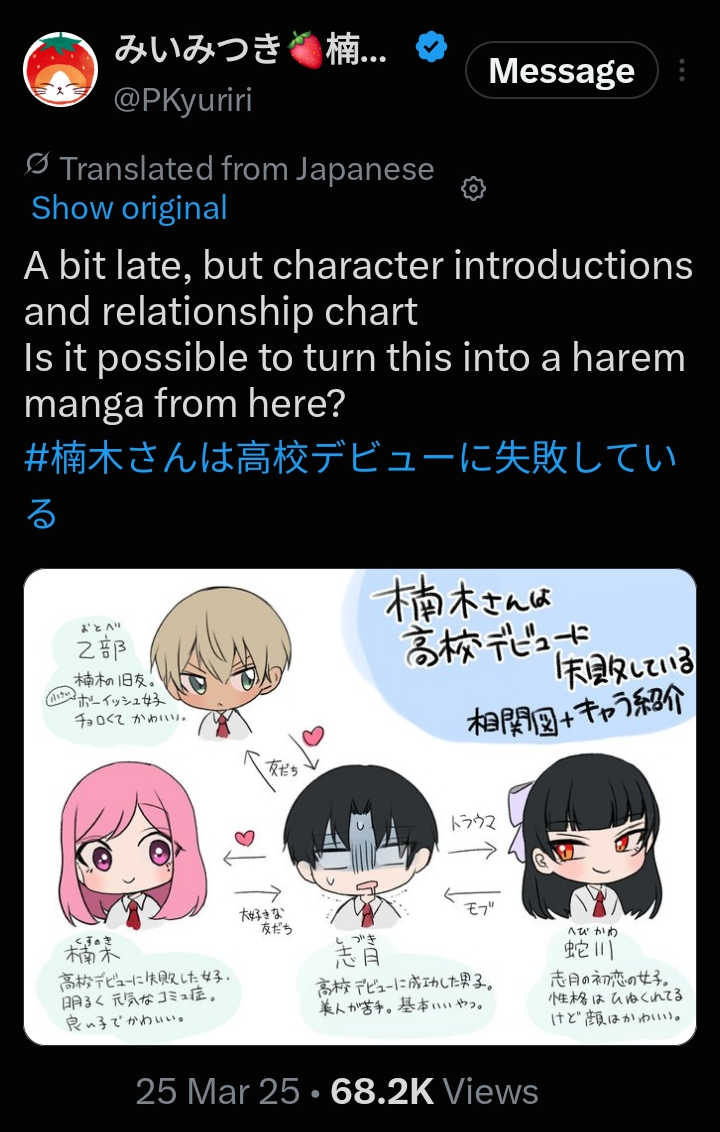
- Keisuke likes her, but also befriends her and learns to overcome his trauma from middle school, growing as a person.
- Otobe was best friends with her in the past and has always idolized her, but now is part of the setup that recreates the "Big Trauma Moment" of Kusunoki's past in the form of a love triangle involving Keisuke. This becomes Kusunoki's chance to do something different, to prove she's grown as a person and can make choices that won't end in her losing all the people important to her.
- Hebikawa is basically "Dark Kusunoki", and is directly an antagonist to her, representing a what-if had Kusunoki made certain choices when she was confronted with the sixth-grade scenario that cost her all her friendships. Hebikawa had a similar outlook as Kusunoki when she was a child, but went down the "dark path" of cynicism and cruel behavior, and thus has a twist worldview that needs to be addressed and rectified.
If you try to put Keisuke in the role of Protagonist, everything becomes centered entirely around a formula involving harem romcoms. But the big outlier becomes Hebikawa herself; you could say that her "role" in the story as it relates to Keisuke is the trauma she inflicted upon him (or rather that he subjected himself to by having a one-sided crush on her and then overhearing her one day in the hallway), but he's since already 'solved it', and now he's more concerned with protecting Kusunoki from whatever he thinks Hebikawa is up to. That still focuses Hebikawa's character toward Kusunoki, making her a bigger narrative focal point than Keisuke and thus both more central and more important to each and every character in the series.
And even with Otobe—yes, she likes Keisuke, but that basically amounts to him being authentic and nice to her, and her falling for him on her own. If anything, she's doing something similar to what Keisuke did regarding Hebikawa in middle school, except she won't hear Keisuke going "Otobe Who?" in the hallway. But she otherwise has no real connection to him in the larger sense of the story, as the whole of her involvement is through Kusunoki.
The problem with thinking there will be a "boring ending" is wrapped up in reading this like a harem romcom and not a Shoujo (maybe even Shonen-esque) series that
incidentally involves multiple girls liking the same boy. But it's more that there's a love triangle between the protagonist, her friend, and the boy they both like, and then an ongoing 'battle' between the protagonist and her "mirrored self", who in turn needs to learn to grow past
her own issues by way of befriending and being influenced by the protagonist.
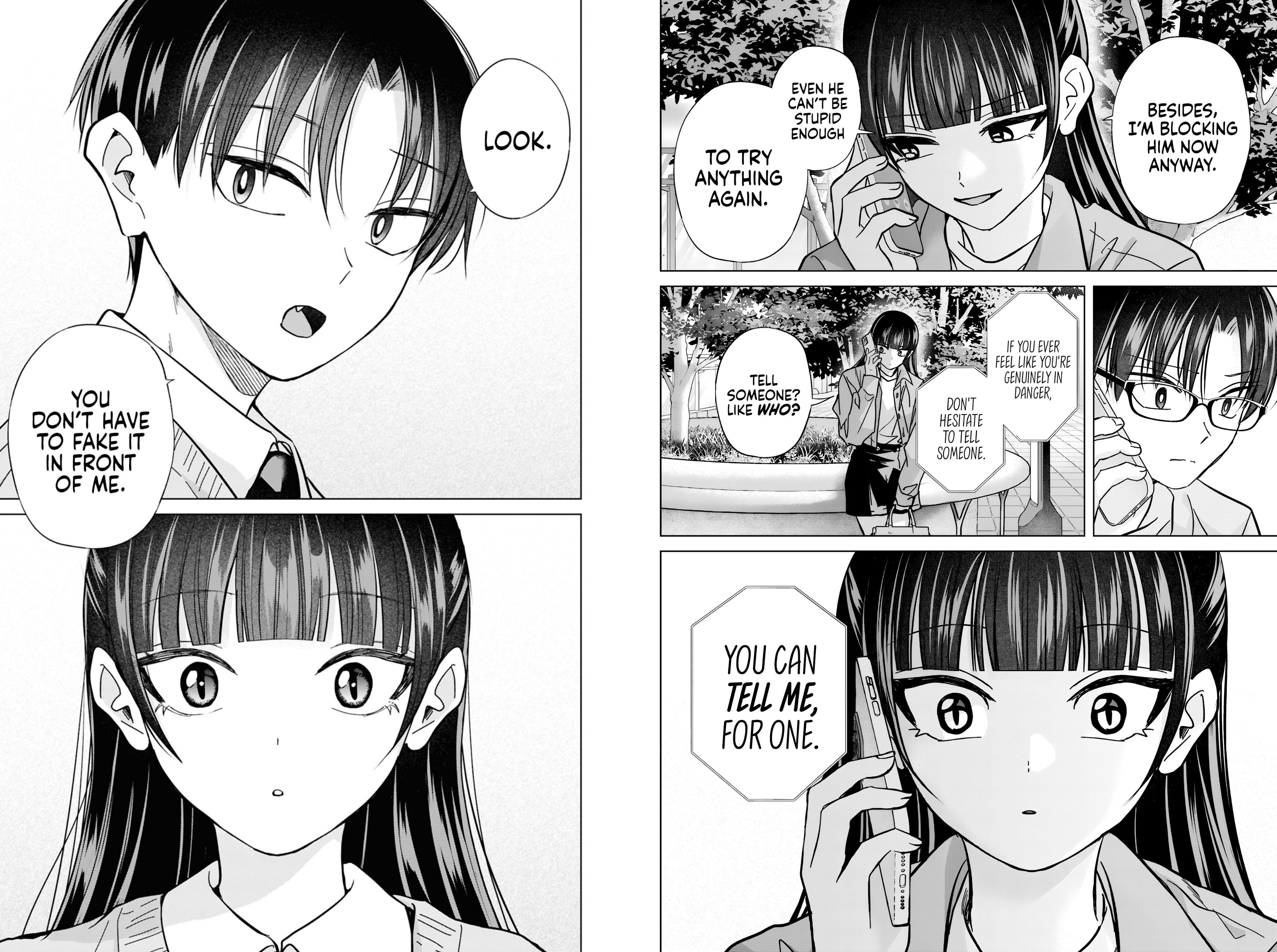
That's why Hebikawa is seeming to change the most when she interacts with Kusunoki. She thinks she can break Kusunoki and reveal the inner darkness she's convinced is there, but even as Keisuke has been kind (though not nice) to Hebikawa (like helping her out on her birthday and when her mom's boyfriend was coming onto her), that merely opened the door for Hebikawa to start getting closer to Kusunoki. But it's
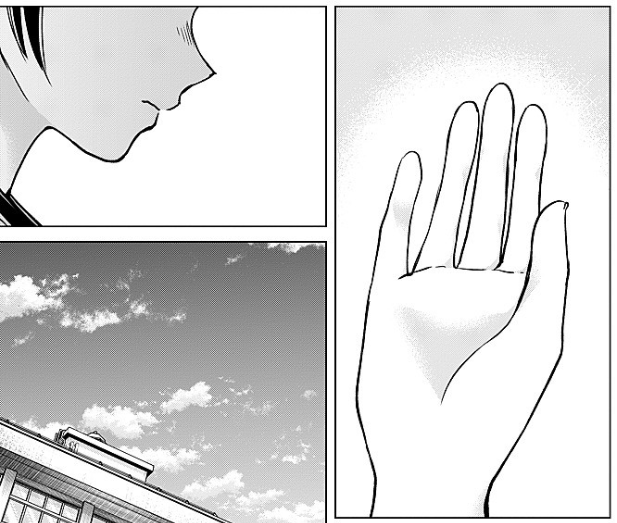
Kusunoki who has been continuously thwarting Hebikawa's plan to break her, by being her pure self. We see it in this very chapter with Hebikawa thrown off entirely after the high-five moment—she's getting a taste of having actual friends who are there entirely of their own volition, and it's forming cracks in her worldview in ways only Kusunoki could do.
This is a story of Kusunoki overcoming her trauma and growing up as a person, first and foremost. The romance angle is tied into that because it's what caused everything to go wrong for Kusunoki in the past, and necessarily involves a love triangle. And Hebikawa's involvement is to "tempt" Kusunoki into going down the wrong path in her attempts to rectify this love triangle, so that she can push through that temptation and keep to her truth & ideals, and show Hebikawa that there's a better path forward, at the same time.
That's why Kusunoki won't "win" Keisuke in the end; there's no actual contest/harem involving romance in the first place. It's more about Kusunoki beating her past, and helping her "dark half" along the way.
And the best ending for Hebikawa is being "saved" by Kusunoki, by way of showing that her worldview isn't wrong, but actually harmful to herself. I wager it'll actually go the direction of Hebikawa having to help Kusunoki, by having their roles flip; Kusunoki will start going "dark" as she struggles to deal with this new Triangle issue between herself and Keisuke and Otobe, and Hebikawa will be changed toward the "light"/Kusunoki enough that she'll step in and help Kusunoki from going down the same path Hebikawa did all those years ago.
Which would be redemption for Hebikawa, in both rejecting her plan to break Kusunoki, and rejecting her old worldview and choosing a more healthy path that promotes real friendships and connections. It wouldn't involve romance with Keisuke, but it
would represent a chance to attain meaningful bonds with other people, which would mean healthier relationship opportunities in the future. After all, her parents being divorced and her mom's boyfriend going after
her is part of that toxic relationship stuff—and Hebikawa needs romance less than she needs healthy foundations for building relationships in the first place.