Yeah, but her grandparents are a bit unusual - most will probably call each other obasan/ojisan.Didn't Shikimori say her grandparents still call each other by their respective family names?
You are using an out of date browser. It may not display this or other websites correctly.
You should upgrade or use an alternative browser.
You should upgrade or use an alternative browser.
Haimiya-senpai wa Kowakute Kawaii - Ch. 23
- Thread starter MangaDex
- Start date

Dex-chan lover
- Joined
- Jan 26, 2023
- Messages
- 4,257
Hmmm, my grandparents called each other mom/dad and grandma/grandpa. Also used their names as well.Yeah, but her grandparents are a bit unusual - most will probably call each other obasan/ojisan.
- Joined
- Mar 20, 2026
- Messages
- 1
Kurose's color panel was simply gorgeous.
It highlighted the blue of his hair and especially his eyes, since Ao means that very color, blue.
This chapter was a delight; this couple truly has such wonderful potential that one can't wait to see them together. In the future, they'll confidently call each other their names.
It highlighted the blue of his hair and especially his eyes, since Ao means that very color, blue.
This chapter was a delight; this couple truly has such wonderful potential that one can't wait to see them together. In the future, they'll confidently call each other their names.
Member
- Joined
- Mar 6, 2019
- Messages
- 76
Have always been a little jealous that in Japan you can rizz someone up by saying their first name
wonder how much that trope actually reflects reality
wonder how much that trope actually reflects reality

Dex-chan lover
- Joined
- Nov 13, 2025
- Messages
- 213
Name reveal soo hard colours came 💦

- Joined
- Feb 1, 2026
- Messages
- 4
thanks for the factRegarding the translator's note on the last page: the Japanese word for "youth" 青春 (seishun) starts with the kanji for "blue" 青 (ao), which is why youth in Japan is associated with the color blue.
Last edited:
Group Leader
- Joined
- Jan 30, 2026
- Messages
- 13
Thank you for the information, but where does the word "youth" imply inside this manga were translating? or is this just a information?Regarding the translator's note on the last page: the Japanese word for "youth" 青春 (seishun) starts with the kanji for "blue" 青 (ao), which is why youth in Japan is associated with the color blue.

Group Leader
- Joined
- Nov 15, 2024
- Messages
- 508
here on the last page:Thank you for the information, but where does the word "youth" imply inside this manga were translating? or is this just a information?

Group Leader
- Joined
- Nov 15, 2024
- Messages
- 508
Regarding the translator's note on the last page: the Japanese word for "youth" 青春 (seishun) starts with the kanji for "blue" 青 (ao), which is why youth in Japan is associated with the color blue.
in the original the side note is:
夕焼けが照らす蒼い春
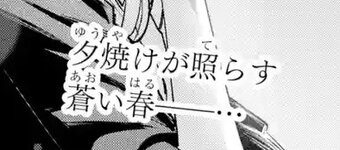
it uses a different kanji for blue: 蒼 the same one with which Ao's name is spelled:

Last edited:

Dex-chan lover
- Joined
- Jan 18, 2025
- Messages
- 918
GreatI'm gay
Group Leader
- Joined
- Jan 30, 2026
- Messages
- 13
Oh yea
Group Leader
- Joined
- Jan 30, 2026
- Messages
- 13
Yeah we know, thanks for explaining.in the original the side note is:
View attachment 46358
it uses a different kanji for blue: 蒼 the same one with which Ao's name is spelled:
View attachment 46361


Similar threads

- 43
- Replies
- 44
- Views
- 37
- Replies
- 38
- Views

- 30
- Replies
- 31
- Views

Users who are viewing this thread
Total: 3 (members: 0, guests: 3)