You are using an out of date browser. It may not display this or other websites correctly.
You should upgrade or use an alternative browser.
You should upgrade or use an alternative browser.
Saijo no Osewa - Takane no Hana-darake na Meimonkou de, Gakuin Ichi no Ojousama (Seikatsu Nouryoku Kaimu) wo Kagenagara Osewa Suru koto ni narimashit…
- Thread starter MangaDex
- Start date


Group Leader
- Joined
- Sep 1, 2024
- Messages
- 2,011
team mirrei, rise up!!!! oraaaaaaaaaaaaaa!!!! let's fucking gooooooo!!!!!!!!
anyways, it's already morning and I haven't gotten a wink of sleep yet, plus the fact I have class in 3 hours. I really hope you're enjoying my barely decent quality so far.
Her drills might not pierce the heavens but it definitely pierced our hearts.

anyways, it's already morning and I haven't gotten a wink of sleep yet, plus the fact I have class in 3 hours. I really hope you're enjoying my barely decent quality so far.
Her drills might not pierce the heavens but it definitely pierced our hearts.
Last edited:

Dex-chan lover
- Joined
- Apr 30, 2018
- Messages
- 1,137
AAAAAAAAAAAAAAAAAAAAAAAAAAAAAAAAAAAAAAAAAAAHHHHHHHHHHHHHHHHHHHHHHHHHHHHHHHHHHHHHHHHH!!!!!!!!!!!!!!!!!! WHY ARE YOU SO CRUEL, GOD!!!!!!

Group Leader
- Joined
- Feb 9, 2024
- Messages
- 901
You can count on him when it matters

Dex-chan lover
- Joined
- Jan 20, 2018
- Messages
- 4,097
At this point, I can only conceive of a harem ending, or one of those multiple choice endings where each girl gets their own. If not, then putting in all of this screentime and development for a losing heroine is absurd.
The drills deserve happiness.
The drills deserve happiness.
Dex-chan lover
- Joined
- Nov 26, 2025
- Messages
- 39
BEST GIRLLL
COME ONNNNNN🔥🔥🔥🔥🔥
COME ONNNNNN🔥🔥🔥🔥🔥

Dex-chan lover
- Joined
- Apr 30, 2018
- Messages
- 1,137
I have to ask. How does it feel to know that you're gonna get lapped by the anime?team mirrei, rise up!!!! oraaaaaaaaaaaaaa!!!! let's fucking gooooooo!!!!!!!!
anyways, it's already morning and I haven't gotten a wink of sleep yet, plus the fact I have class in 3 hours. I really hope you're enjoying my barely decent quality so far.
Her drills might not pierce the heavens but it definitely pierced our hearts.
View attachment 62611

Dex-chan lover
- Joined
- Apr 7, 2019
- Messages
- 11,207
This is as of a confession as we'll gonna get, huh? 

Group Leader
- Joined
- Sep 1, 2024
- Messages
- 2,011
I have to ask. How does it feel to know that you're gonna get lapped by the anime?
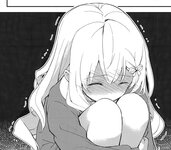


Dex-chan lover
- Joined
- Jul 25, 2020
- Messages
- 553
It's the golden rule of everything in manga, anime, and light novels.Why is it that, like 90% of the time, the losing heroine is far better than that winning one?

Dex-chan lover
- Joined
- Oct 22, 2018
- Messages
- 2,338
Let's go!!
Because you choose to self insert instead of read. 90% of the time the losing heroine is a cardboard cutout of every other losing heroine. Often times the only defining characteristic they have is "They like the MC". It's fine to like a character, but don't delude yourself into thinking what is best for you is also what is best for someone else. There are layers to this, and half the time the losing girl is the least developed character outside of their crush on the MC. They have no real autonomy. No depth to their feelings. It's just "Ooh he helped me during my arc", but people don't see the big picture. They only see the "Flavor of the month girl", and not the FMC who has been developing naturally over time in a more organic way, and not drastically through their own individual arc but slowly over time. Their bond is the most natural and isn't some "Saved heroine #13734", or "Chf who chose to keep the relationship ambiguous until another girl shows up". The losing heroine usually maintains status quo, and lives for the ambiguous stage of a relationship and never tries to make a move until it is too late.Why is it that, like 90% of the time, the losing heroine is far better than that winning one?

Dex-chan lover
- Joined
- Jun 25, 2026
- Messages
- 212
...and yet he's going to reject her anyway.

Dex-chan lover
- Joined
- Apr 28, 2020
- Messages
- 457
for a serious answer, my guess is it's down to something I'll call 'permitted characteristic deviation'.Why is it that, like 90% of the time, the losing heroine is far better than that winning one?
Japanese media (specifically otaku media) relies heavily on character traits and tropes.
The reason you see a lot of manga have similar clichés in plot or in situations characters get themselves into is because the medium is generally (from my own observation) more cast-based than story-based.
The pull is that characters are set up to have their traits and recognisable (in a meta-pattern sort of way) connections to each other right from the start, and therefore they will act differently within each cliché (or the same if there's lazy/uninspired writing).
The problem is that this makes it quite difficult to change and grow your main character(s) in meaningful ways since they're the characters that initially get the readers reading, whilst side characters or losing heroines are almost 'permitted' more of this growth.
Obviously there are some amazing manga where the main characters develop and grow throughout the series, but to me it feels like a very awkward balancing act for the editor and mangaka between 'we need the main heroine to keep her traits/tropes otherwise she'll lose her appeal' and 'we want to make a genuinely good/meaningful piece of fiction'.
At least that's my view of why I think main heroines often fall a bit flatter than side/losing heroines, because side/losing heroines are almost 'permitted' to have their character develop and change more drastically and quickly over a single arc or two than the main.

Its also because the main heroine usually does not get her "arc" until towards the end of the story. She is allowed to develop naturally throughout the series. Then towards the end when it's about time to wrap up the story. They get the last push. The problem with shippers in that regard is they see their character who got their single arc and then got side lined get rejected, so they try to discredit the fmc because they can't look past their own individual biases. They don't look at the natural development that occurred leading up to the big "Main heroine" arc, and refuse to actually see the slow and steady growth that happened throughout the entire series.for a serious answer, my guess is it's down to something I'll call 'permitted characteristic deviation'.
Japanese media (specifically otaku media) relies heavily on character traits and tropes.
The reason you see a lot of manga have similar clichés in plot or in situations characters get themselves into is because the medium is generally (from my own observation) more cast-based than story-based.
The pull is that characters are set up to have their traits and recognisable (in a meta-pattern sort of way) connections to each other right from the start, and therefore they will act differently within each cliché (or the same if there's lazy/uninspired writing).
The problem is that this makes it quite difficult to change and grow your main character(s) in meaningful ways since they're the characters that initially get the readers reading, whilst side characters or losing heroines are almost 'permitted' more of this growth.
Obviously there are some amazing manga where the main characters develop and grow throughout the series, but to me it feels like a very awkward balancing act for the editor and mangaka between 'we need the main heroine to keep her traits/tropes otherwise she'll lose her appeal' and 'we want to make a genuinely good/meaningful piece of fiction'.
At least that's my view of why I think main heroines often fall a bit flatter than side/losing heroines, because side/losing heroines are almost 'permitted' to have their character develop and change more drastically and quickly over a single arc or two than the main.
Its a fundamental issue with how prople treat romcom manga/lns/anime. They view it as a rat race to get to the finish line. They want the confession to happen right away. They care not for the journey. They care only for the destination. A lot of people are super short sited in this space, and refuse to see slow and natural development over time. They only see the jarring character changes and declare "This is best girl" when they only truely cover 1/13th of the actual series.
It also comes from a big misinterpretation of "Romantic chemistry" and "General chemistry" they only see interactions as romantic progress, and not progress towards a good healthy friendship. Just because the girl at the other end of this development has feelings for the guy does not mean he is required to interpret every interaction with them as romantic in nature.
Similar threads

- 46
- Replies
- 47
- Views

- 45
- Replies
- 46
- Views
- 54
- Replies
- 55
- Views

- 42
- Replies
- 43
- Views

